Unit commitment — which generators run, which stand by, how storage breathes — is a combinatorial cost problem where infeasible means the lights go out. We formulate it as an Ising model and train with risk-aware objectives, because on the grid the tail is the story.
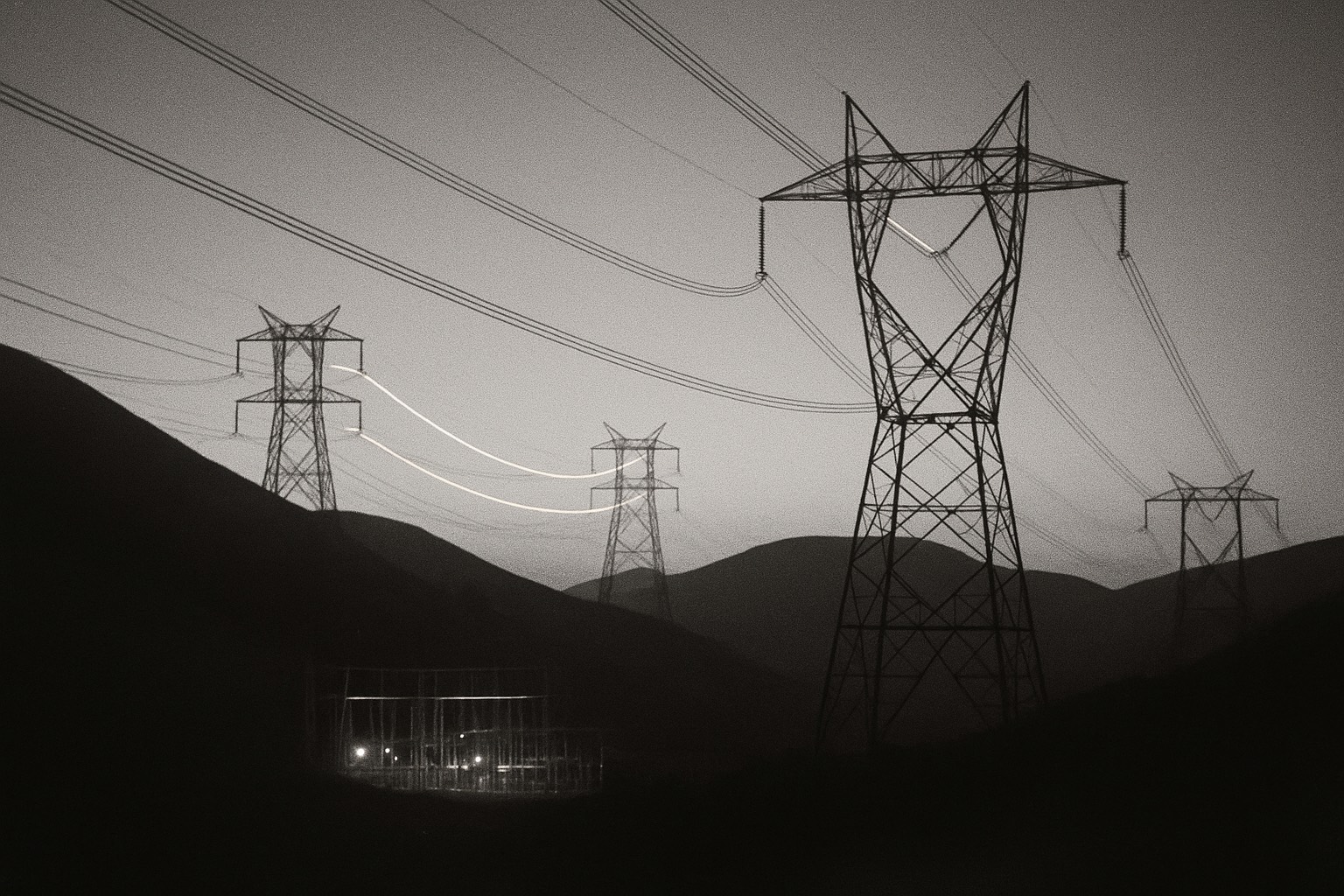
Startup costs, minimum up-times, reserve margins — the feasible region is a maze. As an Ising model, infeasibility becomes an energy penalty the sampler learns to avoid.
Plain expected-value training on our grid instance sampled worse than guessing — a documented failure. CVaR training, which optimises the worst tail of samples, found the optimum. That lesson transfers to your risk desk.
Wind and solar turn commitment into stochastic optimisation. The formulation absorbs scenarios as extra terms — the machinery stays the same.
One substation-scale commitment instance from your grid — units, costs, reserve rules — encoded as an Ising model with penalties your operators agree are the real ones.
CVaR-trained QAOA runs against the expected-value baseline, so you see both the win and the failure mode in your own data.
Where today's devices sit against your instance sizes and what the scaling curve says — pursue, park, or drop.
These programs are published in our algorithm library. The numbers below come from recorded executions we can reproduce on demand.
Unit commitment as an Ising model, trained with CVaR objectives.
Measured: Found the renewables-only optimum; the code documents that plain expected-energy training sampled worse than guessing — the failure mode is part of the lesson.
Results are from the library items' own recorded runs on our simulator — the same one your browser uses.
A national grid commits hundreds of units against thousands of scenarios; that remains mixed-integer programming territory. What quantum offers today is the risk-aware formulation, running honestly at demonstration scale.
Units, costs, reserve rules — an engineer replies with how it maps to spins.